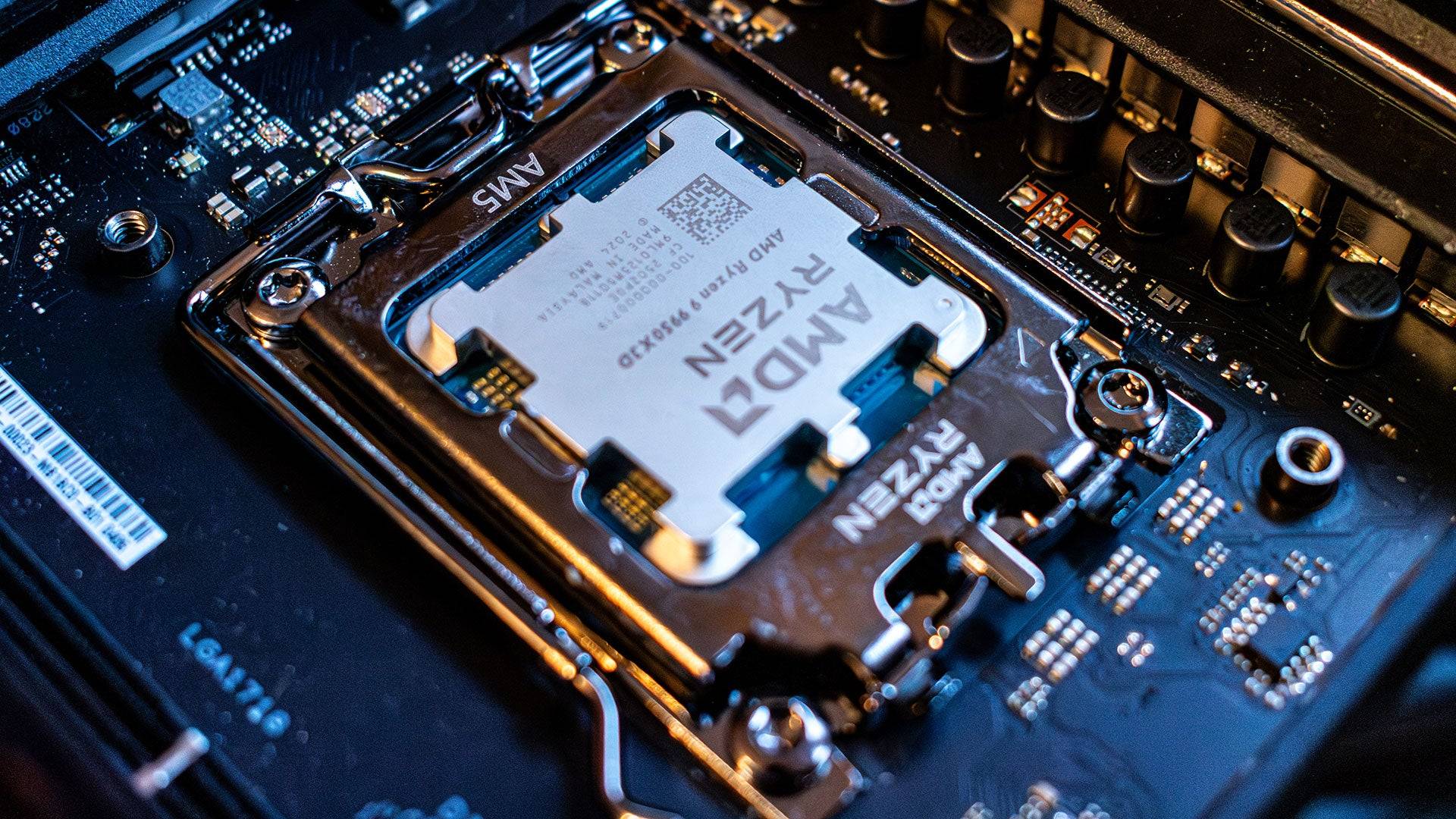
The AMD Radeon RX 9070 enters the market at a pivotal moment for graphics cards, following closely on the heels of Nvidia's latest generation launch. Priced at $549, it directly competes with Nvidia's GeForce RTX 5070, a card that has underperformed expectations. The Radeon RX 9070 emerges as a strong contender, making it an attractive option for gamers looking to excel at 1440p gaming.
However, the decision becomes more nuanced due to AMD's own pricing strategy. The Radeon RX 9070 is just $50 less than the Radeon RX 9070 XT, which offers a performance boost of about 8% for that extra cost. This slight price difference might tempt buyers to opt for the higher-performing XT model. Nonetheless, when it comes to choosing between these two AMD options, the outlook remains promising for Team Red.
Purchasing Guide
----------------The AMD Radeon RX 9070 is set to launch on March 6, starting at $549. However, expect to see various models at higher price points. For the best value, aim to purchase a model as close to the starting price as possible, especially considering its proximity in price to the Radeon RX 9070 XT.
AMD Radeon RX 9070 – Photos
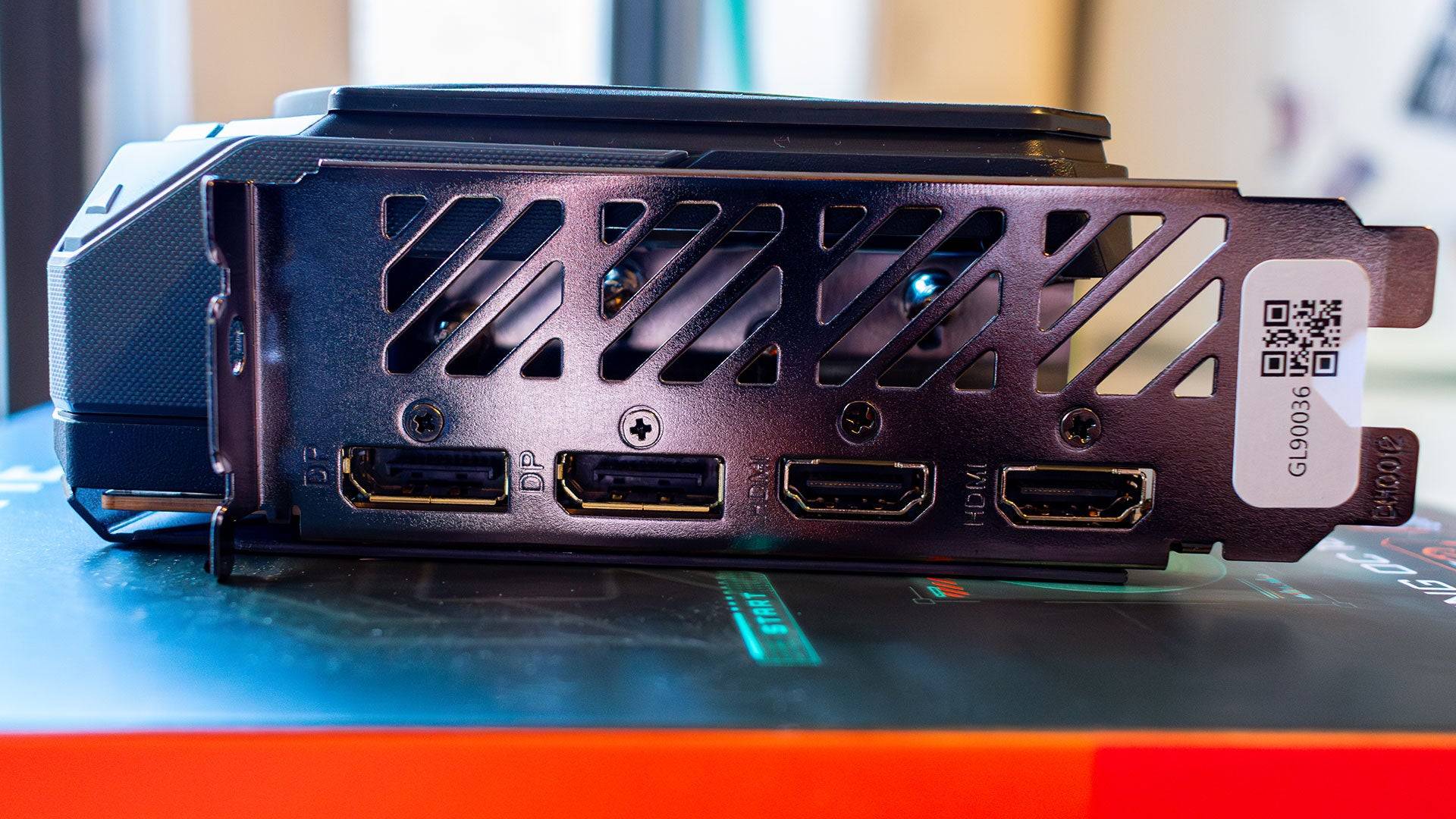
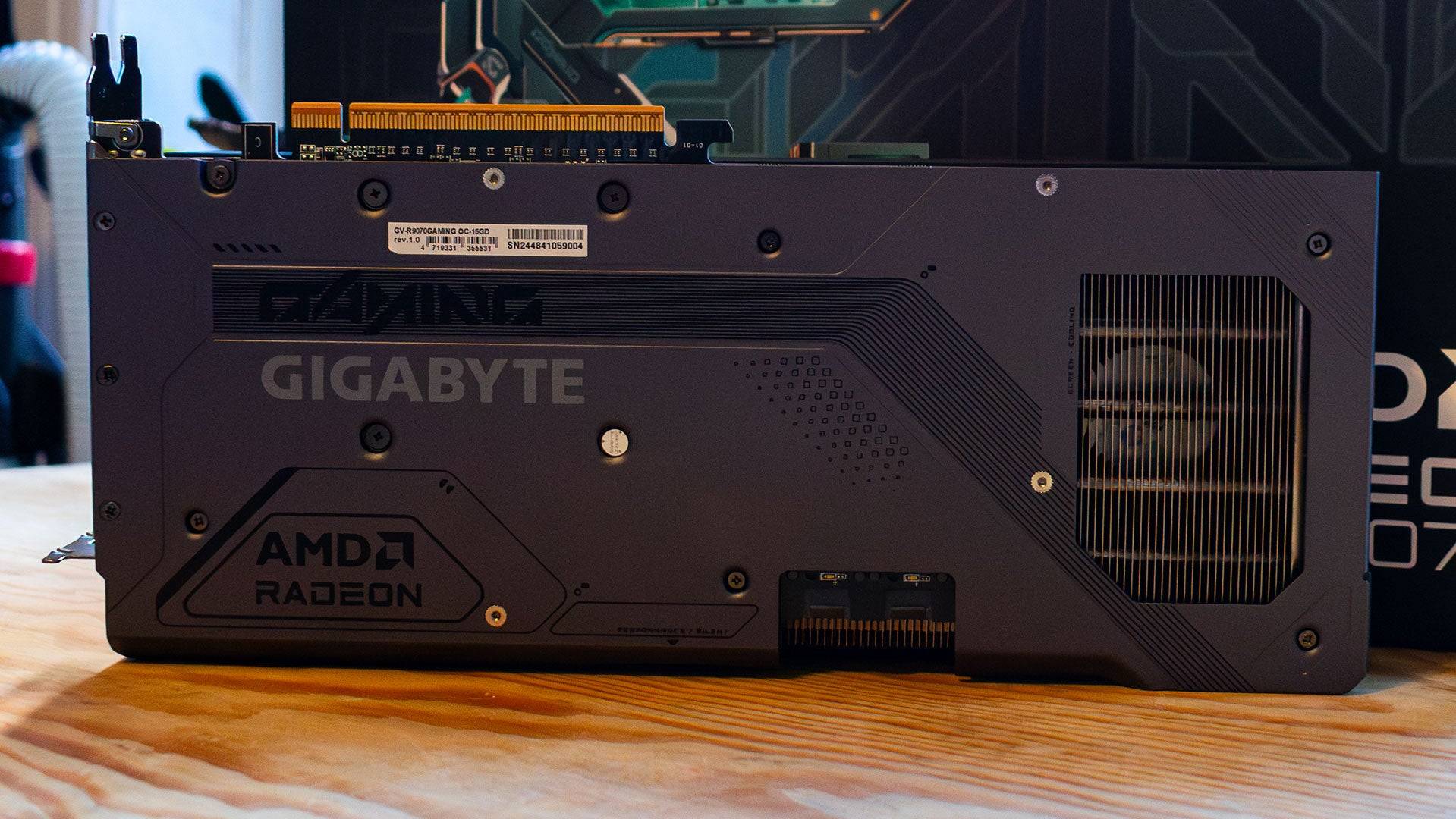 4 Images
Specs and Features
------------------The Radeon RX 9070, like its XT counterpart, is built on the innovative RDNA 4 graphics architecture. This architecture significantly boosts performance, enabling the 9070 to surpass the capabilities of the previous generation Radeon RX 7900 GRE, despite having 30% fewer compute units.
Equipped with 56 Compute Units, each containing 64 Streaming Multiprocessors (SMs), the RX 9070 boasts a total of 3,584 shaders. Additionally, each compute unit includes one Ray Accelerator and two AI Accelerators, totaling 56 and 112 respectively. These enhancements make the RX 9070 competitive in games with ray tracing and introduce AMD's new FidelityFX Super Resolution (FSR) 4, marking the first time AI upscaling is available on AMD graphics cards.
The RX 9070 comes with 16GB of GDDR6 VRAM on a 256-bit bus, similar to the 7900 GRE, ensuring it's well-equipped for 1440p gaming in the years to come. Although AMD did not adopt the GDDR7 memory used by Nvidia, this choice likely helps maintain the card's competitive pricing.
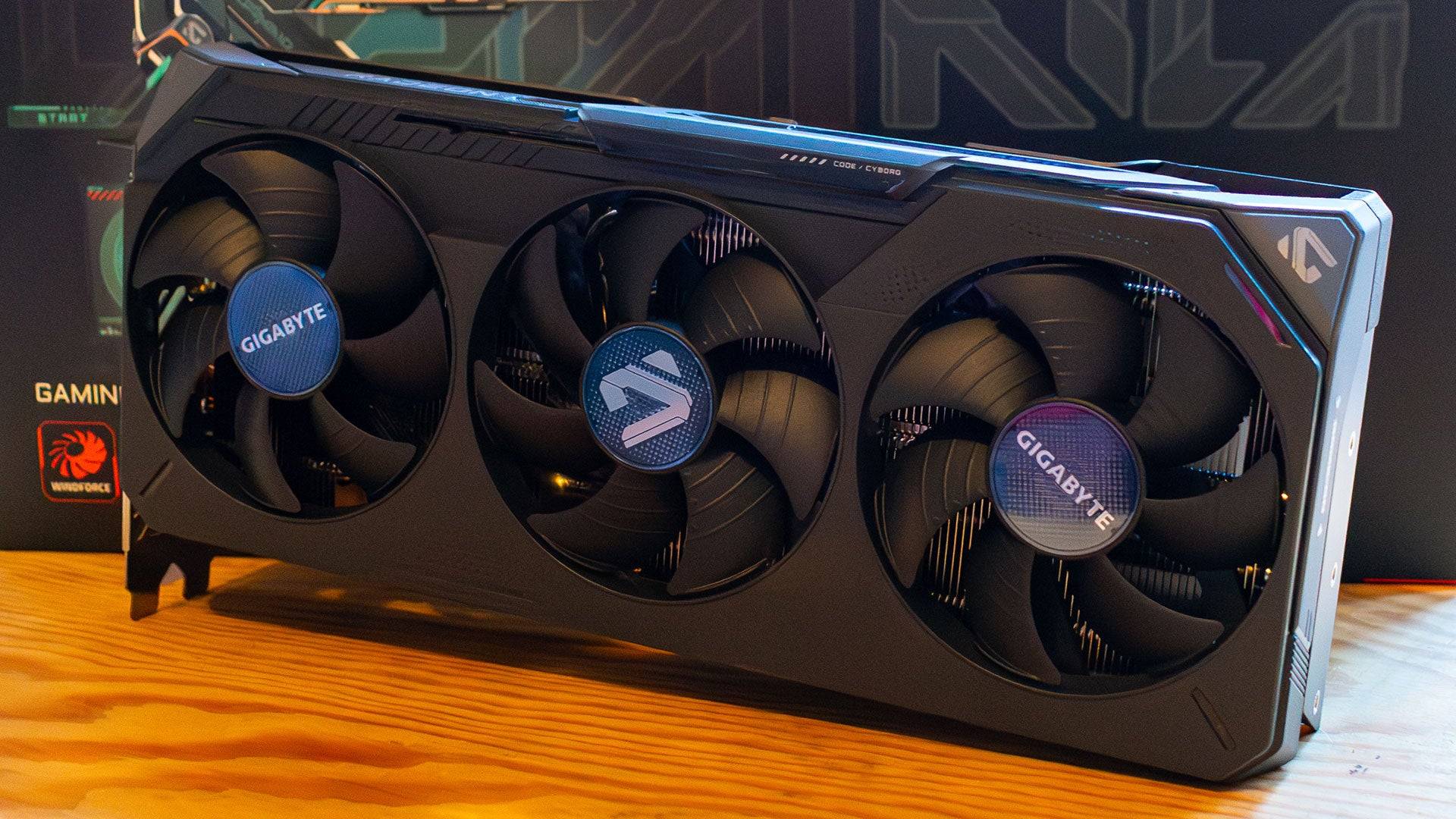
AMD recommends a minimum power supply of 550W for the RX 9070, with a power budget of 220W. My tests showed peak consumption at 249W, suggesting a 600W PSU for added safety. Notably, AMD has opted not to release a reference design for the RX 9070, leaving production to third-party manufacturers. I tested the Gigabyte Radeon RX 9070 Gaming OC 16G, a triple-slot card with a slight factory overclock.
FSR4
----Since the advent of DLSS in 2018, AI upscaling has been a game-changer for performance without significant loss in image quality. Previously an Nvidia-exclusive feature, FSR 4 now brings AI upscaling to AMD GPUs. It uses past frames and in-game data, processed through an AI model, to upscale lower resolution images to native resolution. This differs from the Temporal upscaling in FSR 3, which lacked AI enhancement and could result in artifacts like ghosting.
However, the AI processing in FSR 4 incurs a slight performance cost. For example, in Call of Duty: Black Ops 6 at 1440p on the Extreme preset, FSR 3 delivers 165 fps, while FSR 4 reduces this to 159 fps. Similarly, in Monster Hunter Wilds at 4K with ray tracing, the RX 9070 achieves 81 fps with FSR 3, dropping to 76 fps with FSR 4.
Fortunately, AMD's Adrenalin software allows users to toggle between FSR 3 and FSR 4, enabling them to choose between better image quality or slightly higher performance. For single-player gamers, FSR 4's enhanced visuals might be preferable, while competitive online gamers might opt for FSR 3's performance edge.
AMD Radeon RX 9070 XT & 9070 – Benchmarks
 11 Images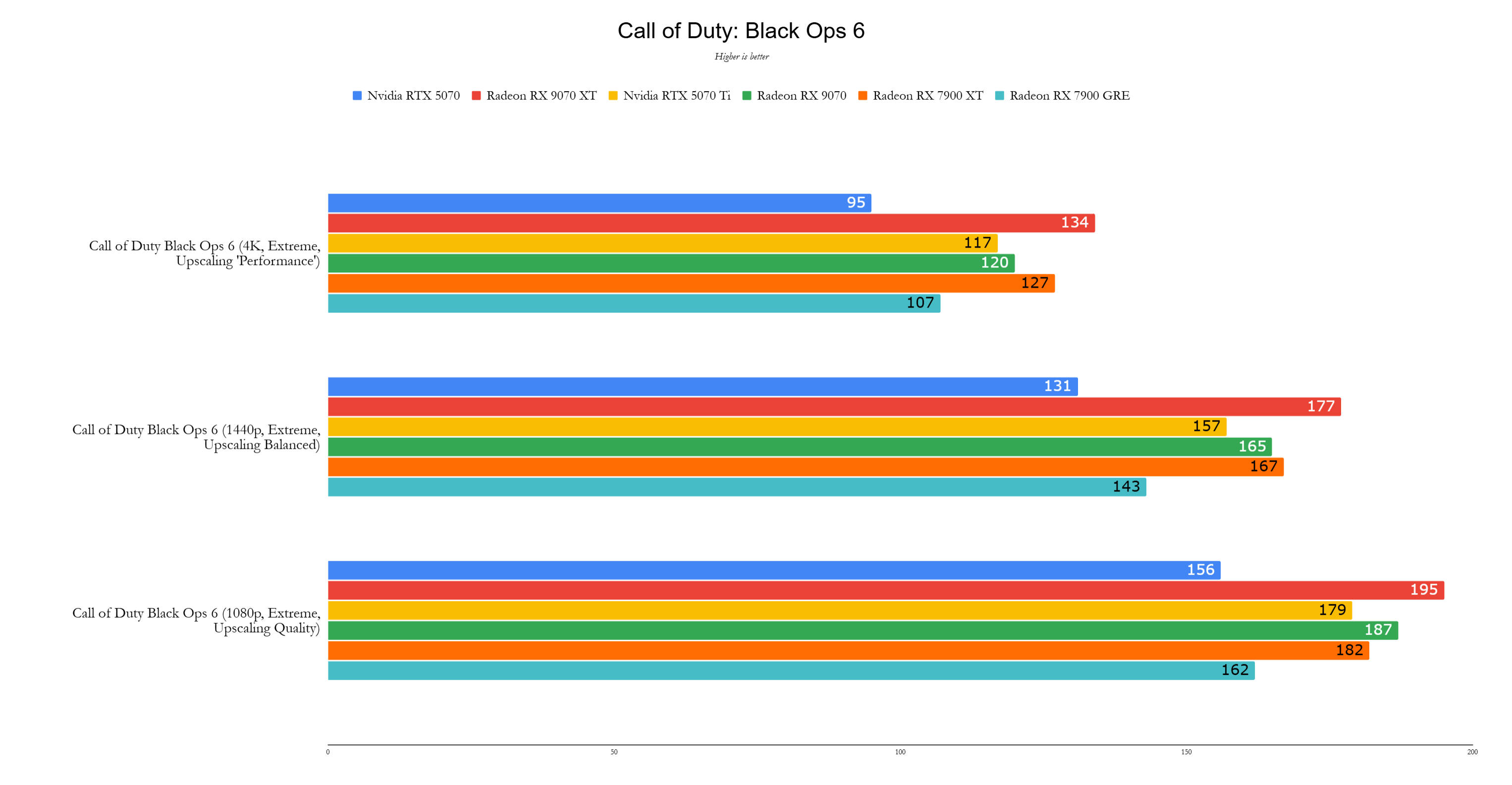
Performance
-----------At $549, the AMD Radeon RX 9070 directly competes with the Nvidia GeForce RTX 5070 and generally outperforms it. At 1440p, it's on average 12% faster than the RTX 5070 and 22% faster than its predecessor, the RX 7900 GRE, despite having 30% fewer cores.
The Gigabyte Radeon RX 9070 Gaming OC I tested features a slight factory overclock, with GPU-Z reporting a boost clock of 2,700Mhz, about a 7% increase. This overclock should boost frame rates by approximately 4-5%.
All tests were conducted using the latest public drivers available at the time: Nvidia cards on Game Ready driver 572.60 and AMD cards on Adrenalin 24.12.1. The RX 9070 and 9070 XT, along with the RTX 5070, were tested using review drivers provided by AMD and Nvidia, respectively.
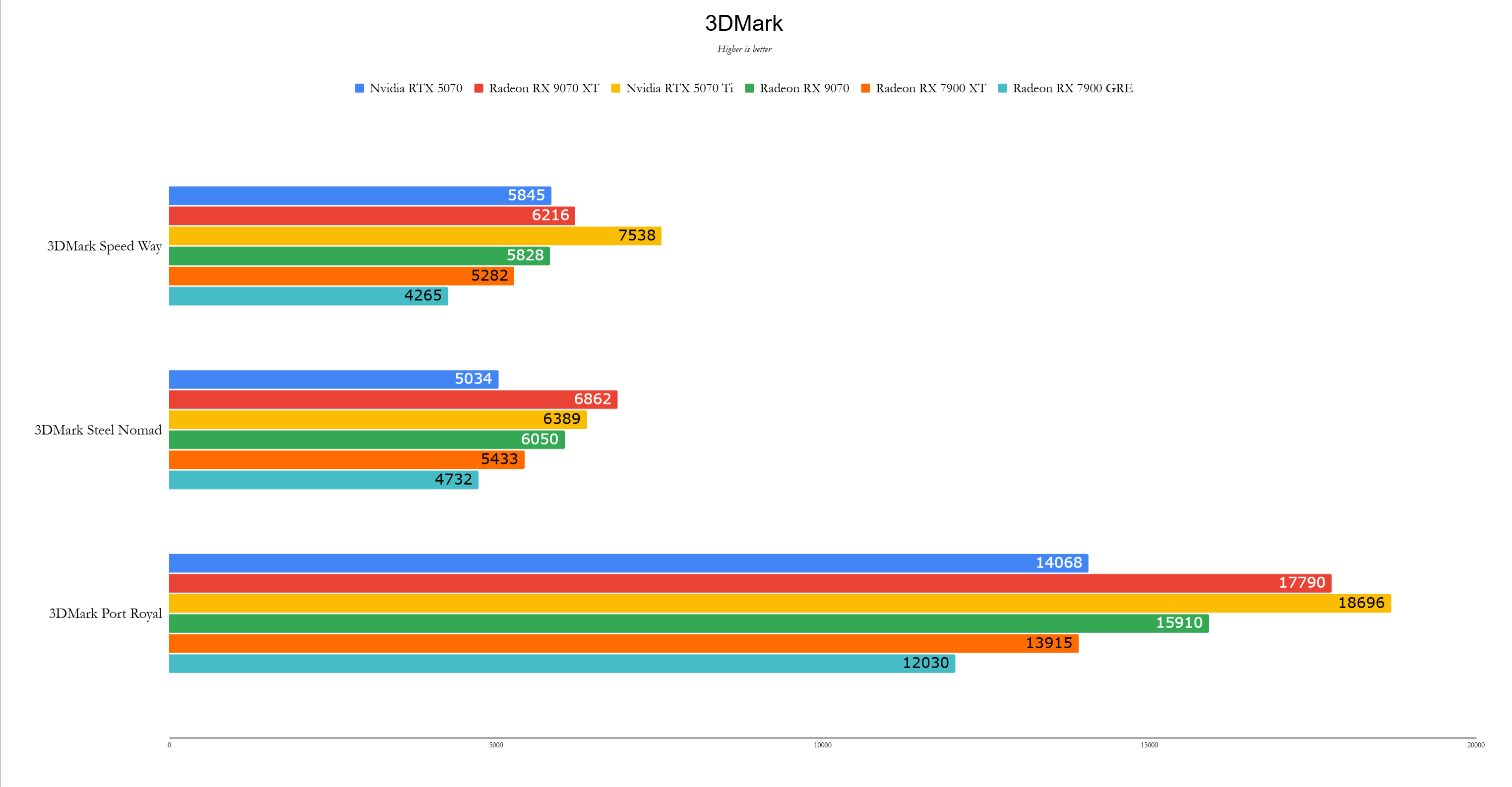
In 3DMark's Speed Way test with ray tracing, the RX 9070 scored 5,828 points, nearly matching the RTX 5070's 5,845. However, in the Steel Nomad test without ray tracing, the RX 9070 significantly outperformed the RTX 5070, scoring 6,050 to 5,034, a 20% lead.
Test System
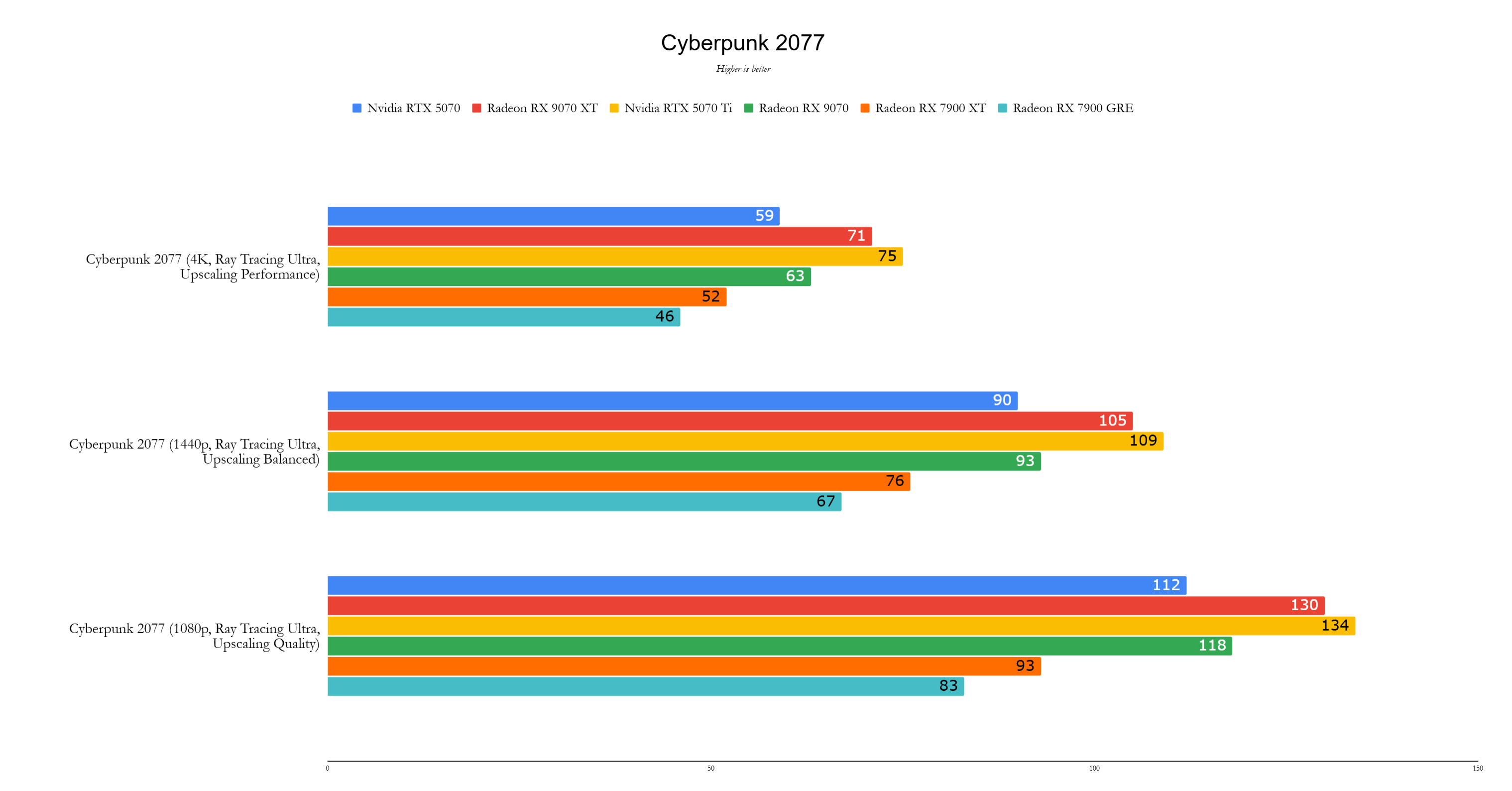
CPU: AMD Ryzen 7 9800X3D Motherboard: Asus ROG Crosshair X870E Hero RAM: 32GB G.Skill Trident Z5 Neo @ 6,000MHz SSD: 4TB Samsung 990 Pro CPU Cooler: Asus ROG Ryujin III 360In Call of Duty: Black Ops 6 at 1440p with FSR 3 set to Balanced, the RX 9070 achieved 165 fps, surpassing the RTX 5070's 131 fps and the RX 7900 GRE's 143 fps. In Cyberpunk 2077 at 1440p with Ray Tracing Ultra, the RX 9070 slightly outperformed the RTX 5070 by 3%, a significant achievement for AMD in a game traditionally favoring Nvidia.
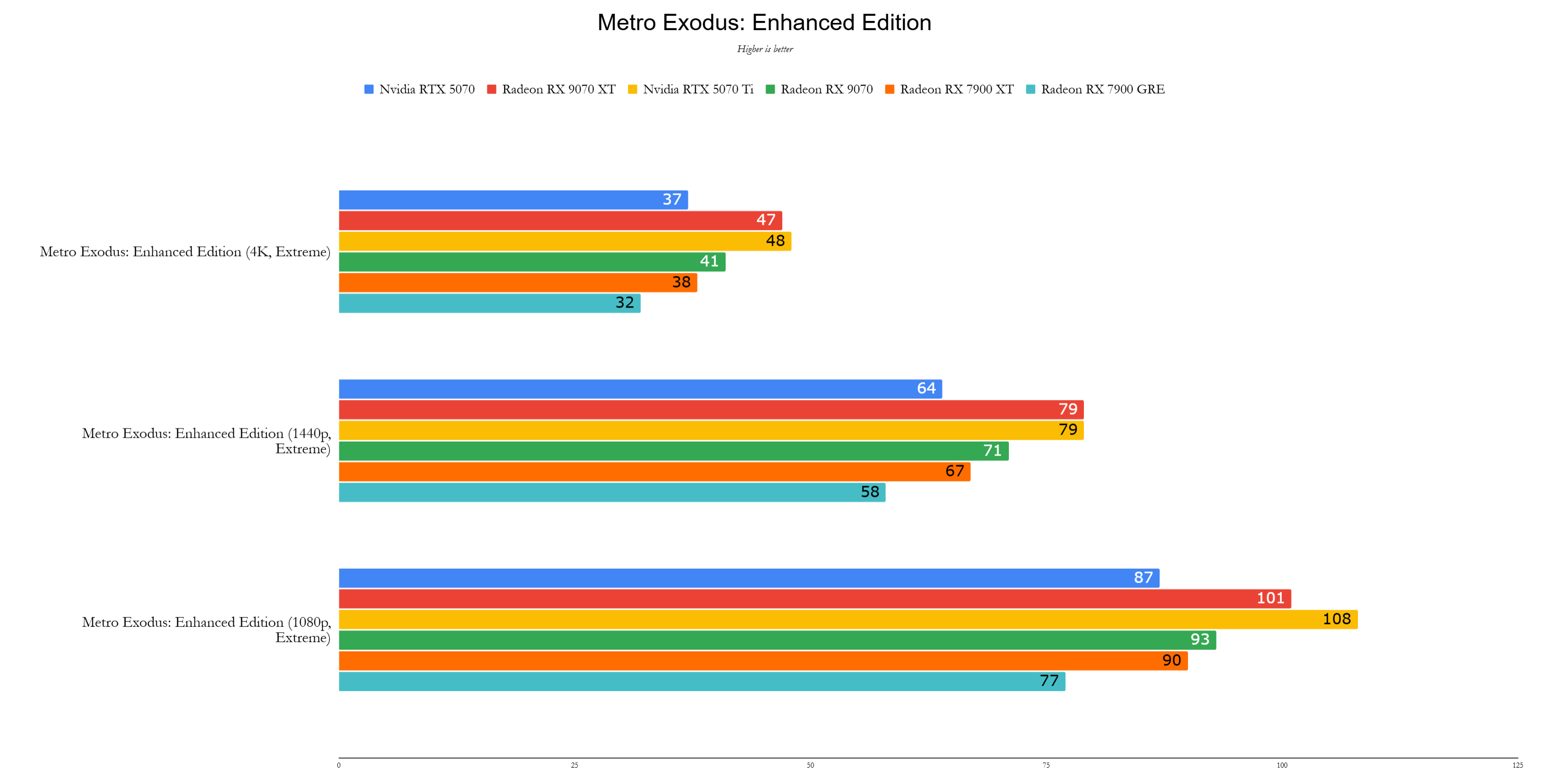
Metro Exodus, tested without upscaling, showcased the RX 9070's superior raw ray tracing performance, averaging 71 fps compared to the RTX 5070's 64 fps. In Red Dead Redemption 2 using Vulkan at 1440p, the RX 9070 achieved 142 fps, a 23% lead over the RTX 5070's 115 fps.
In Total War: Warhammer 3 at 1440p, the RX 9070 and RTX 5070 were neck and neck, with the RX 9070 slightly ahead at 135 fps to the RTX 5070's 134 fps. In Assassin's Creed Mirage at 1440p with FSR set to Balanced, the RX 9070 led with 193 fps compared to the RTX 5070's 163 fps.
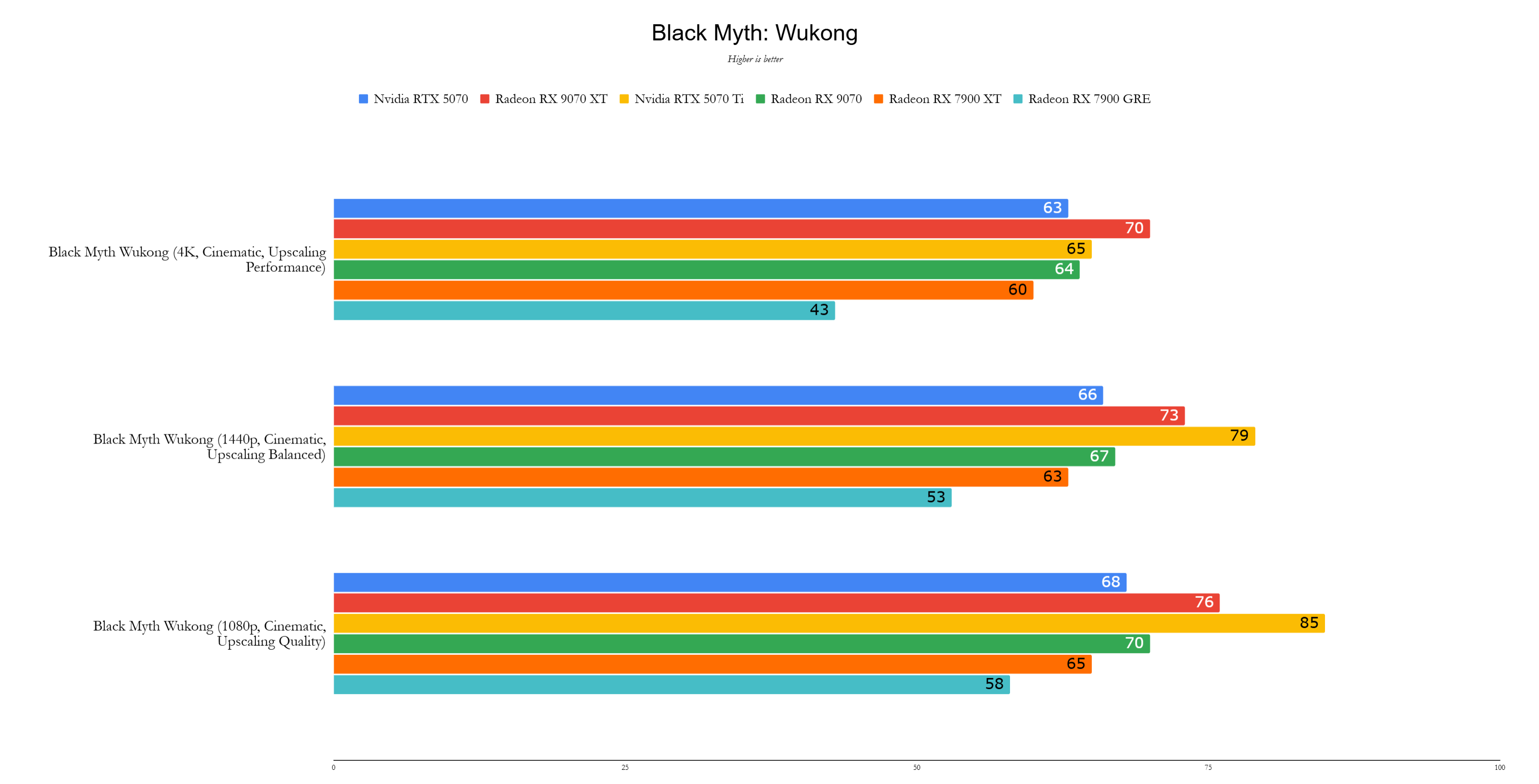
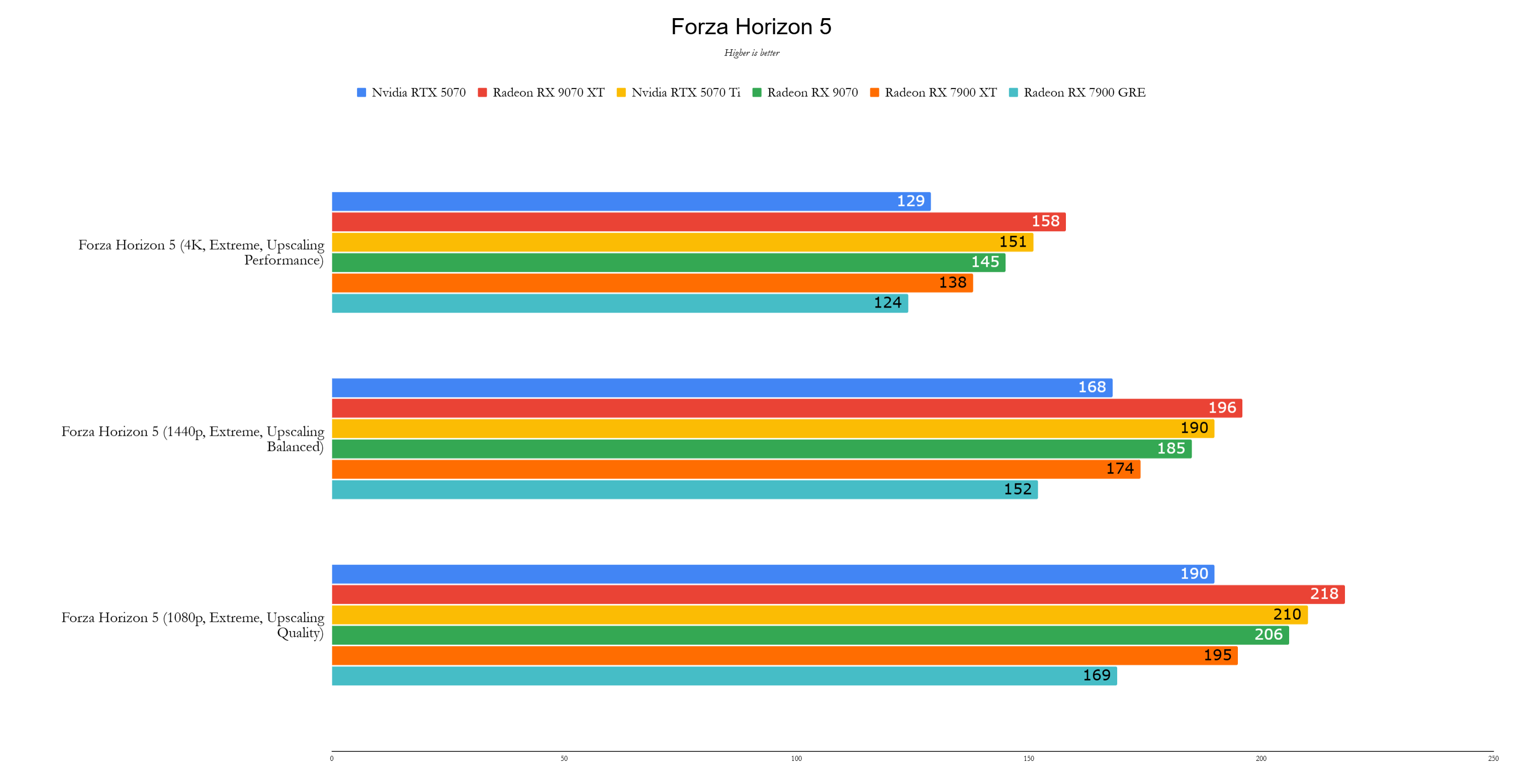
Black Myth Wukong at 1440p showed a close race, with the RX 9070 at 67 fps and the RTX 5070 at 66 fps. In Forza Horizon 5 at 1440p, the RX 9070 averaged 185 fps, outperforming the RTX 5070's 168 fps and the RX 7900 GRE's 152 fps.
The Radeon RX 9070's launch timing capitalizes on the RTX 5070's shortcomings, offering superior performance at the same price point. With 16GB of VRAM, the RX 9070 is well-positioned for future-proofing, even if it uses slightly slower GDDR6 memory compared to the RTX 5070's GDDR7. The combination of better performance and more VRAM makes the RX 9070 a compelling choice for gamers seeking value and longevity.