PlayStation co-CEO Hermen Hulst shares his insights on the role of AI in gaming, emphasizing its potential to revolutionize the industry while underscoring the irreplaceable value of the human touch. Dive into his thoughts and PlayStation's future plans as they celebrate 30 years in the gaming world.
AI Will Never Replace Humans, Says Hulst
A Dual Demand in Gaming
Sony Interactive Entertainment co-CEO Hermen Hulst recognizes AI's transformative potential in gaming, yet insists on the importance of human creativity. In an interview with BBC, he stated that AI can enhance efficiency but will never fully replicate the "human touch" that defines truly engaging games.
Sony and PlayStation have been pivotal players in the gaming industry for three decades, marking their journey from the launch of the original PlayStation in 1994. Over these years, they've navigated the industry's highs and lows, witnessing significant technological advancements, including the rise of artificial intelligence (AI).
Concerns among game developers regarding AI's impact on their careers are valid. While AI can automate routine tasks, making development more efficient, there's a fear it could also encroach on creative roles, potentially displacing human workers. This issue has come to the forefront with recent strikes by American voice actors, particularly within the Genshin Impact community, as companies explore using generative AI to cut costs.

A survey by market research firm CIST revealed that 62% of game development studios are already integrating AI into their workflows, primarily for rapid prototyping, concepting, asset creation, and worldbuilding.
Hulst emphasized the need for balance, stating, "Striking the right balance between leveraging AI and preserving the human touch will be crucial. I suspect there will be a dual demand in gaming: one for AI-driven innovative experiences and another for handcrafted, thoughtful content."
PlayStation is actively exploring AI's potential, with Sony's AI department established in 2022 to enhance development efficiency. Beyond gaming, Sony aims to expand its intellectual properties into multimedia, with projects like the upcoming Amazon Prime series based on the 2018 game, God of War. Hulst expressed his vision to elevate PlayStation's IP beyond gaming into the broader entertainment industry.
Rumors suggest Sony's interest in acquiring Kadokawa Corporation, a move that could bolster its multimedia presence, though details remain confidential.
PlayStation 3 Was Aiming Way Too High
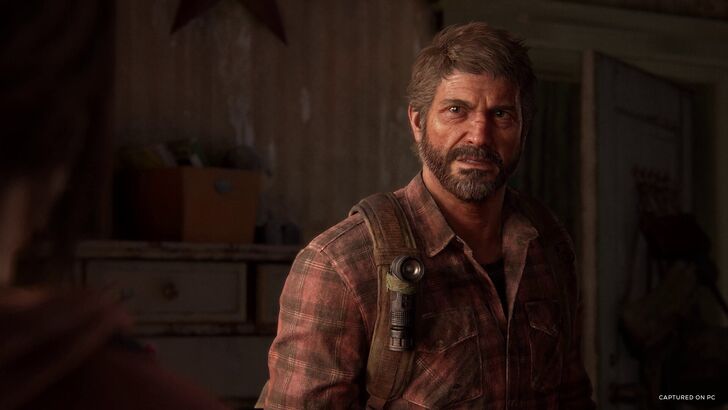
Reflecting on PlayStation's 30th anniversary, former PlayStation chief Shawn Layden shared insights from his tenure, highlighting the ambitious yet challenging launch of the PlayStation 3 (PS3). Layden described the PS3 as their "Icarus moment," where they "flew too close to the sun."
With each new console generation, the pressure to innovate was immense. The PS3 was envisioned as a supercomputer with capabilities like running Linux, but this ambition stretched the team too thin. Layden remarked, "PS3 got us back to first principles... You take a little tumble, you hit your head on the wall, and you realize, 'I can't continue to operate this way.'"
The PS3 experience taught the team to focus on gaming as the core function of their consoles. When the PS4 was released, it was positioned as the ultimate gaming machine, in contrast to Xbox's broader multimedia ambitions. Layden concluded, "Just make it the best game machine of all time. I think that's what really made the difference."